API Scalability: Why Your APIs Become Growth Bottlenecks
API Scalability: Why Your APIs Become Growth Bottlenecks
Your product may be growing faster than your APIs can handle.
Every new feature, every partner integration, every mobile release adds another consumer to the same set of endpoints. Nobody sat down and decided how many callers the first API would eventually need to support – it just kept growing.
Most product scalability conversations focus on the database and the application layer. The API layer breaks first more often than either, and it usually stays invisible until a partner integration starts timing out or a new mobile release ships with calls nobody load-tested.
This article looks at why APIs specifically become the constraint on product growth. It covers what CTOs and architects need in place before that happens – not just the scaling patterns, but the governance and reliability work that usually gets skipped.
What Does It Mean When APIs Become the Bottleneck?
Quick answer
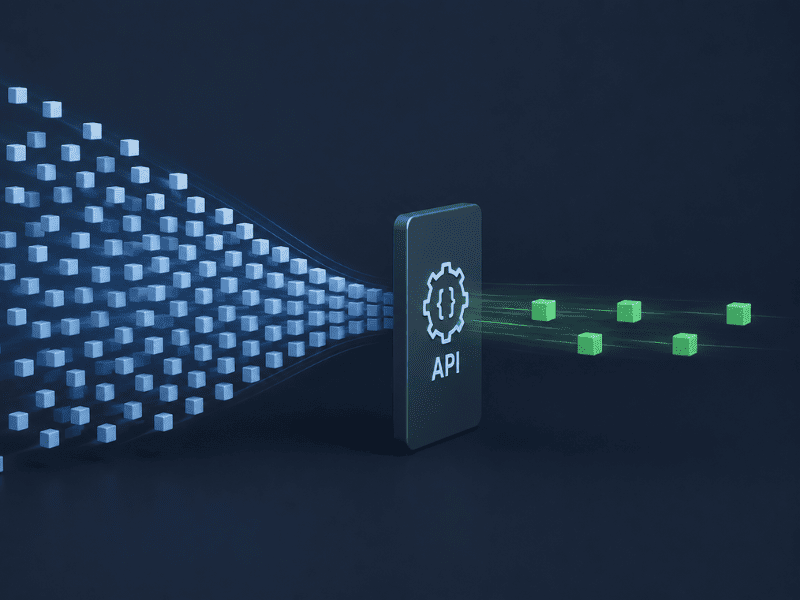
An API becomes a growth bottleneck when the interface layer – not the database, not the application code – is what limits how fast a product can add users, features, or integrations. It shows up as slower releases, rate-limit errors under normal traffic, and integration partners who can’t get reliable data.
A product’s architecture can scale fine at the database and compute layer and still hit a wall at the API layer. Every consumer – a mobile app, a partner integration, an internal microservice – depends on the same interface contract staying fast, versioned correctly, and available. That’s a different problem than general product scalability, which covers the whole architecture. API scalability is specifically about the interface layer that every one of those consumers has to go through.
The scale of the problem is bigger than most teams assume. The average enterprise now manages 354+ distinct APIs across its infrastructure, each with its own routing, authentication, rate limiting, versioning, and monitoring requirements (Zuplo). And that number is growing fast: organizations managing 100+ APIs jumped from 59% to 66% year-over-year, a 167% increase in total API count (Salt Security, via DreamFactory).
None of that growth is optional. It’s the direct result of a product doing well – more integrations, more platforms, more automated consumers. The question isn’t whether your API surface will grow. It’s whether the architecture, governance, and reliability practices around it grow with it.
API Scalability Patterns: What Works, and What Just Delays the Problem
Quick answer
API scalability patterns manage load and change without breaking existing consumers. The core set includes rate limiting, edge caching, event-driven APIs for high-volume workflows, gateway-based horizontal scaling, and disciplined versioning. Most teams adopt one or two of these reactively, after an incident, instead of designing for all of them upfront.
- Rate limiting and throttling: protect the API from being overwhelmed by any single consumer – including a well-meaning internal team running a batch job at the wrong time. Without it, one noisy consumer can degrade the experience for everyone else calling the same endpoint.
- Caching at the edge: cuts repeat load for data that doesn’t change on every request. Product catalogs, pricing tiers, and configuration data are common candidates. Caching is often the cheapest scalability win available, and it’s frequently skipped because it wasn’t needed at launch.
- Asynchronous, event-driven APIs: replace request-response calls with queues or event streams for workflows that don’t need an instant answer – report generation, notification delivery, bulk data sync. This decouples the caller from the API’s real-time capacity limits.
- Gateway-based horizontal scaling: puts a gateway in front of API instances so capacity can scale out – not just up – as traffic grows. This is also where authentication, logging, and rate limiting get enforced consistently instead of per-team.
- Versioning discipline: lets the API evolve without breaking every consumer at once. A published deprecation policy – not a silent breaking change – is what separates a scalable API from one that quietly accumulates integration risk with every release.
There’s a newer pressure on top of all of this: non-human traffic. Industry projections put AI agents, IoT devices, and other automated systems at roughly 80% of API traffic by the end of 2026 (Zuplo). That traffic doesn’t behave like a browser session – it can burst thousands of requests in seconds, then go quiet for hours. Capacity planning built around human usage patterns doesn’t hold up against that.
The Governance Gap Nobody Budgets For
Quick answer
API governance means having a clear owner, a registry, and a retirement process for every API in the organization. Without it, teams build new APIs without knowing equivalent ones already exist, and roughly 30% of an organization’s APIs end up outside any governance framework entirely.
Platform engineering has made it easier than ever for teams to spin up new APIs on self-service infrastructure – Gartner expects 80% of large engineering organizations to run this kind of platform by 2026. That’s good for developer velocity and bad for governance if nothing else changes, because it accelerates exactly the kind of uncoordinated API growth that leads to sprawl (IBM).
governance framework, and total annual losses tied to poorly governed APIs are projected to exceed $100 billion in 2026 (Boomi). Security follows the same pattern: 57% of organizations have suffered an API-related data breach in the past two years, and of those, 73% suffered three or more (Salt Security, via IBM).
Shadow APIs
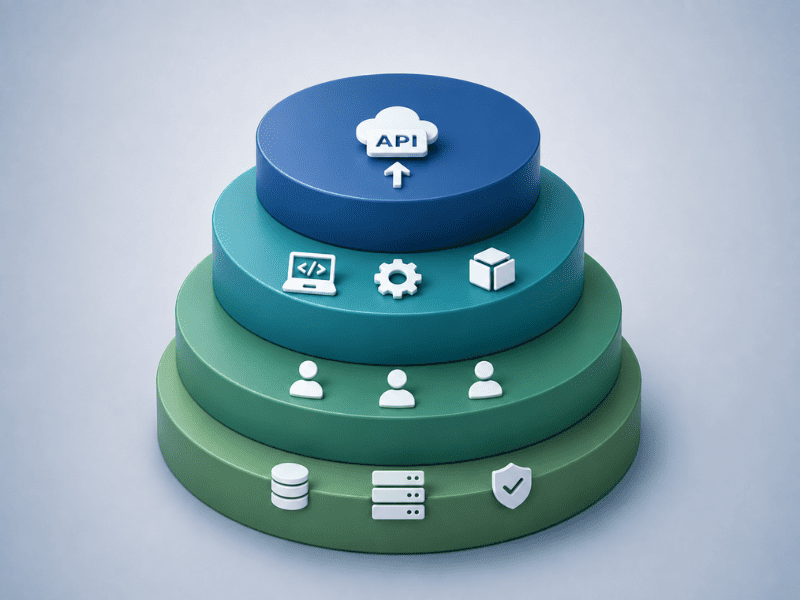
APIs built without IT oversight are the sharpest edge of the governance gap. They frequently ship without proper authentication, encrypted data in transit, or rate limiting, and organizations typically don’t discover them until a breach, an anomalous traffic spike, or a compliance audit surfaces them.
A governance program that actually holds up has a few concrete pieces, not just a policy document:
- Ownership: every API has a named owner accountable for its uptime, security, and lifecycle – not a team that built it and moved on.
- A discoverable registry: engineers can find out whether an equivalent API already exists before building a new one.
- Shared standards: authentication, error handling, and versioning follow the same conventions across teams, so consumers don’t need custom logic per API.
- A retirement process: deprecated APIs get sunset on a schedule, with consumers notified – not left running indefinitely because nobody wants to be the one who breaks something.
Reliability Considerations: When “It Works in Staging” Isn’t Enough
Quick answer
API reliability means the interface keeps working – and fails predictably – under real production conditions, not just in a load test. That requires circuit breakers, graceful degradation, and monitoring built for the API layer specifically, because the cost of API downtime is measured in minutes, not incidents.
Downtime costs have moved well past the old rules of thumb. The median enterprise outage in 2025 cost approximately $9,000 per minute for organizations with 1,000+ employees – up from $7,900 in 2023 – and 35% of enterprises reported at least one outage exceeding $1 million (ITIC, via JustAnalytics).
Financial services feels this most acutely, which matters for any team building on top of banking or payment APIs. Weekly API downtime in the sector rose sharply between Q1 2024 and Q1 2025, up roughly 60% over that period (Resolve Pay).
Reliability at the API layer comes from a specific set of practices, not from redundant infrastructure alone:
- Circuit breakers: stop a failing downstream dependency from cascading into every service that calls it. A slow database shouldn’t be able to take down five unrelated features.
- Graceful degradation: lets an API return a partial or cached response instead of a hard failure when a dependency is unavailable. Users notice a slow answer far less than they notice an error page.
- Health checks and readiness probes: let load balancers and orchestration tools route traffic away from instances that can’t serve requests correctly, before users hit the failure.
- API-specific monitoring: tracks latency, error rate, and traffic patterns per endpoint – not just whether the server is up. A server can be healthy while a specific API is timing out for every caller.
Five Signs Your APIs Are Already the Bottleneck
Quick answer
The signs are usually operational, not technical: slower releases, partner integrations that fail under load, and enterprise prospects asking API reliability questions your team can’t answer with confidence. Any one of these is worth investigating before the next growth push.
| Symptom | What’s Actually Happening |
|---|---|
| Release velocity keeps dropping | Shared endpoints force every team through the same review and testing cycle before shipping |
| Partner integrations time out at peak hours | No caching or rate limiting layer to absorb traffic bursts |
| Mobile app fails silently on poor connections | No graceful degradation or retry strategy built into the API contract |
| On-call engineers can’t explain outages quickly | Monitoring exists at the infrastructure level but not per API endpoint |
| Enterprise prospects ask about API SLAs your team can’t answer | Reliability wasn’t designed in – it’s being retrofitted under deal pressure |
Building an API Strategy That Scales With the Product
Quick answer
A scalable API strategy starts with an inventory of what exists, assigns ownership, and puts a gateway with rate limiting in front of every consumer-facing endpoint before scale forces the issue. Observability and failure-mode design come next – not after the first major incident.
For CTOs and architects planning the next growth stage, the sequence matters more than any individual tool:
- 1. Inventory every API – including shadow ones: you can’t govern or scale what you haven’t found. This step alone usually surfaces more APIs than leadership expects.
- 2. Assign ownership and a deprecation policy: before adding new capacity, make sure every existing API has someone accountable for it.
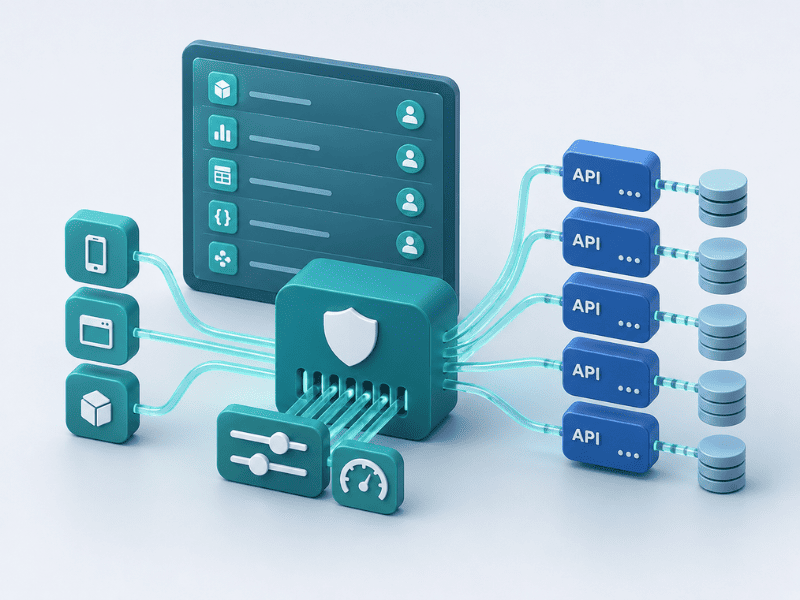
- 3. Put a gateway in front of every consumer-facing endpoint: centralize authentication, rate limiting, and logging instead of leaving each team to implement its own version.
- 4. Instrument for observability before scale forces it: per-endpoint latency and error tracking should exist before traffic triples, not after.
- 5. Design for partial failure, not just uptime: decide what a degraded response looks like for each critical API before a dependency actually goes down.
Pair this roadmap with a broader architecture review. Our guide to product scalability decisions that matter early covers how these choices fit into the wider system. Our piece on the different types of APIs and their use cases is a useful starting point if the inventory step turns up architectures your team hasn’t standardized on.
How IMT Solutions Supports API Scalability
IMT Solutions has spent 17 years building software for BFSI, fintech, healthcare, and enterprise clients across Switzerland, the EU, and the US – environments where an unreliable API doesn’t just slow down a feature, it stalls a regulated transaction or a partner integration under contract.
We work with engineering teams to inventory existing API surfaces and design gateway and governance architecture that scales with the product. That includes the reliability practices – circuit breakers, graceful degradation, per-endpoint monitoring – that hold up under real production load, not just in a demo.
If your product is approaching the point where the API layer needs to be a deliberate architecture decision rather than an afterthought, explore our case studies or contact our team to talk through where your APIs currently stand.
Frequently Asked Questions
What is API scalability?
API scalability is the ability of an API to handle growing traffic, more consumers, and more integrations without a proportional increase in latency, errors, or engineering effort. It depends on architecture patterns like rate limiting and caching, along with the governance and reliability practices that keep the interface stable as it’s called more often, by more systems, in more unpredictable ways.
What’s the difference between API scalability and product scalability?
Product scalability covers the whole system – databases, application logic, infrastructure. API scalability is specifically about the interface layer every external and internal consumer depends on. A product can scale well at the database layer and still hit a wall at the API layer if that layer wasn’t designed for the number of consumers now calling it.
How do I know if my APIs are becoming a bottleneck?
Watch for slower release cycles caused by shared endpoint dependencies, partner integrations timing out during peak traffic, and enterprise prospects asking about API SLAs or uptime guarantees your team can’t confidently answer. Any one of these is a reasonable trigger for an API architecture review before the next growth push.
What is API governance and why does it matter?
API governance is the set of practices – ownership, a discoverable registry, shared standards, and a retirement process – that keeps an organization’s API surface from becoming an uncoordinated sprawl of overlapping, unmaintained endpoints. Without it, roughly 30% of an organization’s APIs end up outside any governance framework, which is also where most API-related security incidents originate.
Do small products need to worry about API reliability early?
Not to the same degree as an enterprise system, but the earlier reliability patterns like versioning discipline and basic rate limiting are in place, the cheaper they are to build. Retrofitting reliability after an integration partner or an enterprise customer is already depending on the API is a far more expensive and disruptive project than designing it in from the start.
Conclusion
APIs rarely fail because of one dramatic incident. They become a bottleneck gradually – a rate limit that was never set, an ownership gap that let a governance problem grow for two years, a reliability pattern that only gets built after the outage that made it necessary.
The organizations that stay ahead of this treat the API layer as a first-class architecture decision, not a byproduct of shipping features. That means inventorying what exists, assigning ownership, and building the scalability and reliability patterns in before growth forces the issue – not after.
IMT Solutions helps engineering teams across BFSI, fintech, healthcare, and enterprise software design API architecture that holds up under real growth. Contact our team to talk through where your API layer currently stands, or browse our case studies to see how we’ve approached this with clients.